Fatty Acid Integrity and Polyphenol Release Behavior of Microencapsulated Sea Buckthorn (Hippophae rhamnoides L.) Seed Oil
Vishal Kumar
*

College of Post Harvest Technology and Food Processing, Sardar Vallabhbhai Patel University of Agriculture and Technology, Meerut- 250 110, India.
Durga Shankar Bunkar
Department of Dairy Science and Food Technology, Institute of Agricultural Sciences, Banaras Hindu University, Varanasi – 221 005, India.
S.K.Goyal
Department of Agricultural Engineering, Institute of Agricultural Sciences, Banaras Hindu University, Varanasi – 221 005, India.
Vinod Kumar Paswan
Department of Dairy Science and Food Technology, Institute of Agricultural Sciences, Banaras Hindu University, Varanasi – 221 005, India.
Anu Kumari
College of Post Harvest Technology and Food Processing, Sardar Vallabhbhai Patel University of Agriculture and Technology, Meerut- 250 110, India.
*Author to whom correspondence should be addressed.
Abstract
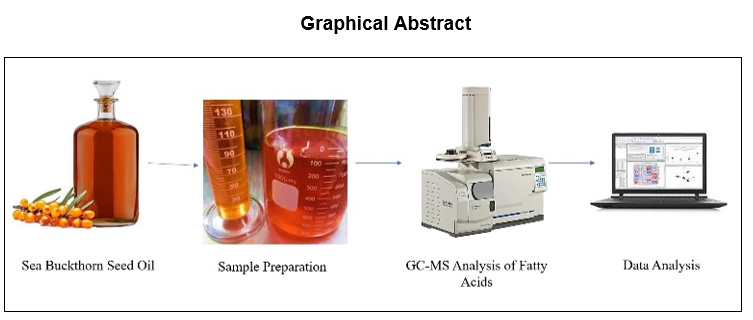
Sea buckthorn (Hippophae rhamnoides L.) seed oil is a rich source of nutritionally valuable unsaturated fatty acids and bioactive compounds; however, its high susceptibility to oxidative degradation limits its applicability in food and nutraceutical systems. This study investigated the fatty acid composition and polyphenol release behaviour of microencapsulated sea buckthorn seed oil to evaluate its stability and functional potential. Fatty acid profiling of the microencapsulated oil revealed substantial levels of oleic acid (C18:1), linoleic acid (C18:2), and α-linolenic acid (C18:3), along with notable amounts of palmitic, stearic, and palmitoleic acids. The balanced distribution of essential omega-3 and omega-6 fatty acids, together with bioactive monounsaturated fatty acids, underscores the nutritional significance of the oil. Release kinetics of encapsulated polyphenols in aqueous medium exhibited a three-phase behaviour characterized by an initial burst release (18–31% within 10–20 min), followed by a diffusion-controlled mid-phase release (48–75% within 20–45 min), and a final plateau phase (>90% within 120–180 min). These findings suggest efficient matrix hydration, structural relaxation, and controlled erosion of the spray-dried wall system. The consistency of release data, supported by low variability and statistically significant differences among time intervals, demonstrates uniformity in microcapsule formation and effective encapsulation. Overall, microencapsulation significantly enhanced the stability, controlled release, and potential bioavailability of sea buckthorn seed oil constituents, highlighting its suitability for incorporation into functional food and nutraceutical applications.
Keywords: Sea buckthorn seed oil, microencapsulation, fatty acids, GC-FID, oxidative stability, functional foods, nutraceuticals