Microbiome-Driven Regulation of Brain Function: Molecular Pathways Linking Gut and Neuropsychiatric Health
Rajesh Ramasandra Venkataraja
Indian Council of Agricultural Research- Indian Institute of Agricultural Biotechnology (IIAB), Ranchi, Jharkhand-830043, India.
Pramod Kumar Meghwal
Indian Council of Agricultural Research- Indian Institute of Agricultural Biotechnology (IIAB), Ranchi, Jharkhand-830043, India.
Brendon Lalchawimawia *
Indian Council of Agricultural Research- National Institute of Secondary Agriculture, Namkum, Ranchi- 834010, India.
*Author to whom correspondence should be addressed.
Abstract
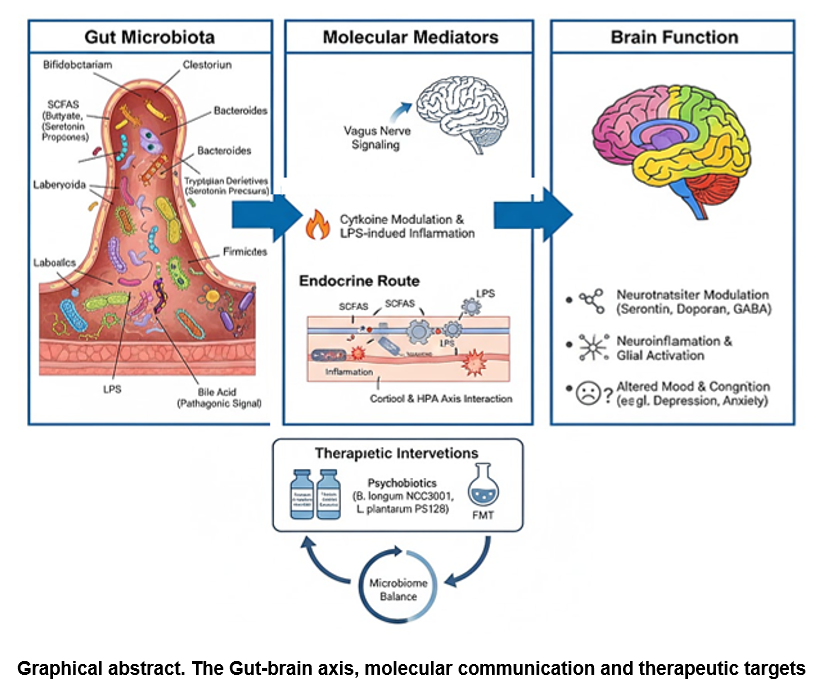
This review critically appraises seminal studies on emerging mechanisms of gut-brain communication, summarising microbiome-targeted clinical interventions, and highlighting future trajectories for therapeutic development in mental health. The gut microbiome, comprising trillions of microbial cells, exerts major influence over host metabolism, immunity, and neural function. Through the gut–brain axis, a complex network linking neural, immune, and endocrine pathways, microbial communities shape cognition and emotional regulation. Mounting evidence identifies key microbial taxa, metabolites, and molecular pathways governing mental health. Core mediators include short-chain fatty acids, tryptophan–kynurenine metabolites, and bile acid derivatives, which modulate blood–brain barrier integrity, neurotransmission, and systemic inflammation. Dysbiosis-driven endotoxaemia, particularly via lipopolysaccharide signalling, activates neuroinflammatory cascades implicated in depression and anxiety. Precision psychobiotics such as Bifidobacterium longum NCC3001 and Lactobacillus plantarum PS128 show strain-specific efficacy in reducing depressive symptoms in randomised controlled trials. Both animal and human studies highlight bidirectional interplay: psychological stress reshapes gut ecology, while microbial imbalance disrupts mood and cognition. Emerging interventions, including faecal microbiota transplantation and synthetic microbial consortia, show translational promise but remain constrained by ethical and regulatory barriers. This review integrates findings from clinical trials, multi-omics mapping, and computational models to clarify microbiome–brain mechanisms. It outlines prospective directions in psychobiotic design, metabolite biomarkers, and systems-based therapeutics, framing the gut microbiome as a modifiable determinant of neuropsychiatric health. With continued rigorous investigation and integration across disciplines, microbiome research is poised to revolutionise our understanding and management of mental health disorders, ultimately enhancing patient outcomes and quality of life.
Keywords: Gut–brain axis, gut microbiota, intestinal dysbiosis, neuroinflammation, psychobiotics, depression, autism spectrum disorder, microbiome-targeted therapy, precision psychiatry